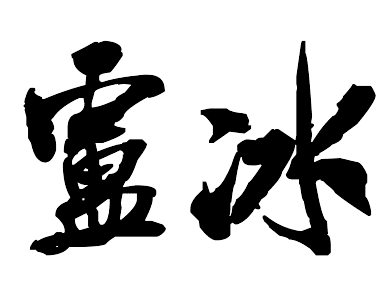
My name is Bing, 冰, the Chinese word for ice.
我的名字是冰。
The Chinese character for ice, 冰, holds two traces of water: 冫 on one side and 水—water itself—on the other, as though water, just before freezing, caught sight of itself twice. I often think about the transformations between water and ice: how movement comes to rest and how form dissolves back into motion. Sound moves in much the same way—passing, changing, dispersing, then taking shape again through bodies, spaces, and acts of listening.
冰字有两笔水,像是水在凝住之前,先把自己看了两遍。我常常想水与冰之间的变幻:流动如何停下,成形又如何再次散开。声音似乎也是这样流转——经过、变化、消散,又在身体、空间与一次次倾听中重新成形。
The erhu was where I first heard water. As the bow hair draws across the strings, I hear the surface of water opening; vibrato becomes a ripple, a sustained bow stroke a river, and a pause the quiet current beneath the ice. Over more than twenty years with this instrument, I have learned to sense the temperature of vibration, the weight of silence, and the way a sound, just before it disappears, folds its resonance into the air.
二胡是我最早听见水的地方。弓毛擦过琴弦时,那不是声音,是水面被划开;揉弦是涟漪,长弓是河,停顿是冰面下暗暗的涌。二十多年,我在这件乐器里学到的不只有音乐,还有如何辨认振动的温度、沉默的厚度,以及一个声音在消逝前,如何把余韵折进空气里。
Later, I moved from performance to listening, and from listening further afield. How do we come to know the world through sound? How does sound arise between people, and how does it leave traces in memory? When sounds from long ago reach the present, what do they become in our listening? The further I travelled, the more these questions seemed to lead me back to sound itself: when sound passes through us, what does it carry away, and what does it leave behind?
后来,我从演奏走向聆听,又循着聆听走到更远的地方。我开始好奇:我们如何借由声音认识世界?它如何在人与人之间建立联系,又如何沉入记忆?那些来自过去的声音,又如何在今天获得新的回响?而走得越远,我似乎越接近最初的问题:声音经过我们,留下些什么,又悄然带走些什么?
Water flows. Ice forms. Sound passes through. My listening, perhaps, takes place somewhere among the three. Between gathering and dispersing, between hearing and disappearance, I wait for the next sound to pass.
水流,冰凝,声音穿行。我的倾听,大概就在这三者之间。在凝聚与四散之间,在听见与消失之间,等下一个声音经过。